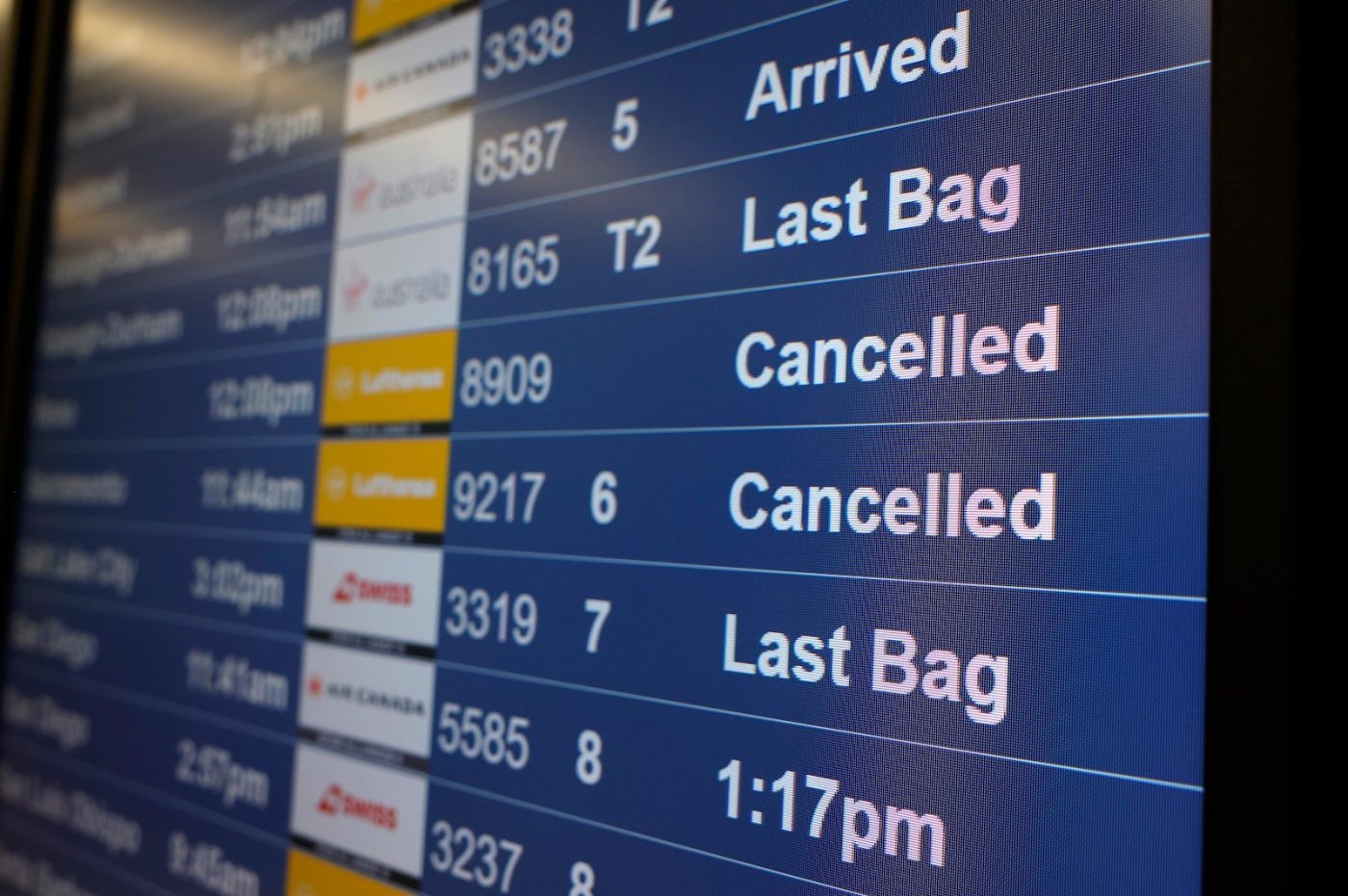

Air travel across the United States was thrown into widespread disruption as lawmakers in Washington moved toward ending the government shutdown. Since Saturday, roughly 32,000 flights have been delayed or canceled — more than 23,000 over the weekend and nearly 9,000 on Monday — as staffing shortfalls in air traffic control tied to the shutdown affected dozens of major airports.
Terminals filled with stranded passengers, and aircraft that did depart often encountered hours-long backups on taxiways at hubs including Hartsfield-Jackson Atlanta (ATL) and Newark Liberty (EWR). Many travelers opted to stay home, rebook on other carriers, or drive instead. An early-season winter storm moving through the Midwest and Great Lakes on Monday threatened to make conditions worse.
Airlines had initially forecast cutting about 800 to 900 flights per day because of FAA-ordered reductions linked to the shutdown. The actual impact was far larger: on Sunday nearly 3,000 flights were canceled and almost 11,000 more delayed, according to flight-tracking data. By Monday afternoon airlines had already canceled more than 2,100 flights that day.
The staffing crunch was particularly severe at some facilities. On Saturday, 18 of 22 air traffic controllers at ATL called off work, producing average ground delays that at one point topped five and a half hours. With fewer controllers available to manage the usual daily volume of departures and arrivals, multi-hour backups became common at the biggest hubs.
Major carriers reported heavy disruption. American Airlines said operations over the weekend affected about 250,000 customers and warned that the coming days would remain difficult. Delta canceled hundreds of additional flights as it tried to stabilize operations; by noon Monday the carrier had canceled 495 flights across its mainline and regional network, noting that cancellations were a last resort after other options were exhausted.
Chicago O’Hare (ORD) was hit especially hard as snow combined with staffing shortages. At one point nearly 20% of departures at ORD were canceled. Reporters and passengers described long delays and travelers sleeping overnight in terminals while flights that did operate ran hours late.
To reduce strain, the FAA expanded required flight reductions at 40 major airports. Beginning Tuesday the agency raised mandated cuts to 6% of scheduled flights at those airports (up from 4%), with the possibility of 10% cuts starting Friday if conditions warranted. Still, localized staffing shortfalls and no-shows frequently pushed actual disruptions above those thresholds.
Airlines and industry groups pressed Congress to approve a short-term funding measure to reopen the government and restore full staffing, saying maintaining a safe, reliable airspace is especially critical during peak travel and cargo demand.
For travelers: expect continued disruption in the near term. Airlines have issued flexible waiver and refund policies and advise passengers to monitor flight status closely, arrive early, and have backup plans. With the holiday travel period approaching and winter weather beginning in parts of the country, passengers should be prepared for the possibility of extended delays or cancellations until staffing and operations return to normal.